
VerbMaster Teacher Guide
Every teacher knows the feeling: students understood it on Friday but by Monday, it's gone. It's not because they didn't care or didn't study — it's because of how the brain actually learns and stores information.
To understand how to help students truly master verbs, we first need to look at what's happening in their memory systems — and how we can get knowledge to stick for good.
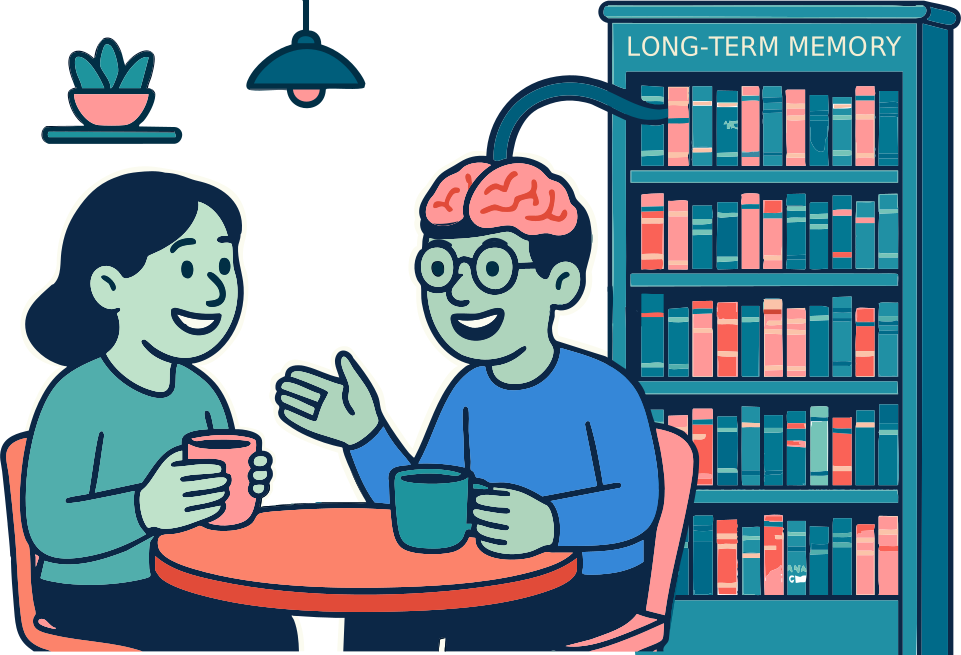
Quick question: How do you say "to eat" in Spanish?
Comer, right? — You knew it instantly.
What you just experienced is called automaticity.
Automaticity is the effortless, instant retrieval of knowledge from long-term memory.
The goal then would be to shift students from relying on working memory to instead drawing effortlessly from long-term memory.
For verbs, this would mean the difference between students hesitating, puzzling, and freezing, vs. speaking confidently and understanding in real time.
Mastery Learning is the philosophy that supports this shift.
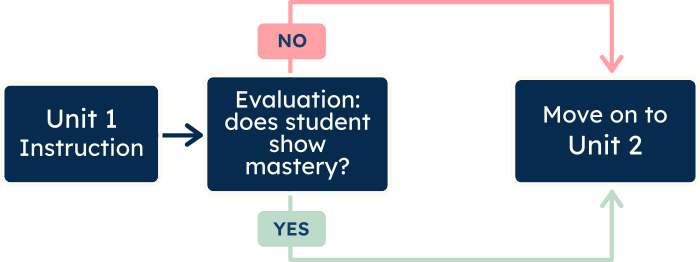
Traditional Learning System
In the Traditional Model, students move forward in lockstep, regardless of whether they've truly mastered the material.
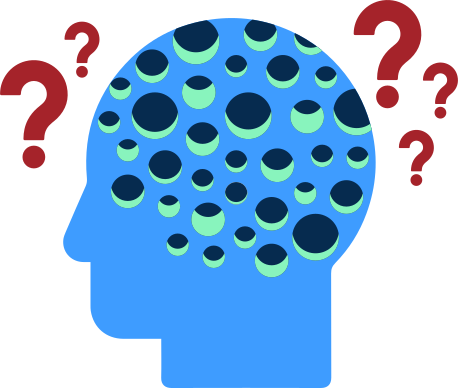
The result is gaps in knowledge, like a slice of swiss cheese, creating a fragile foundation for future learning.
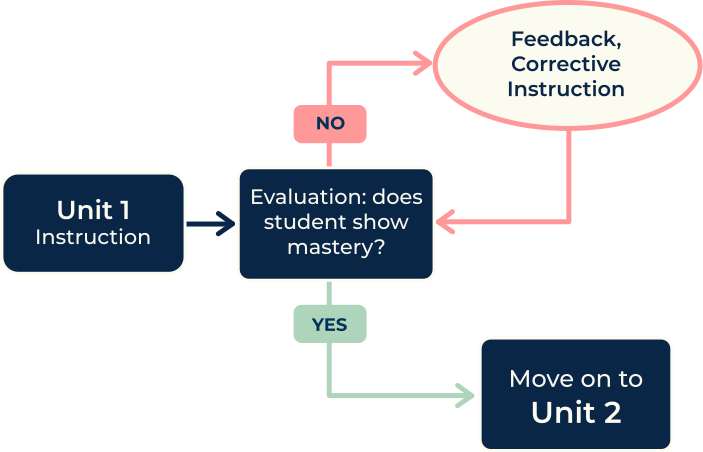
Mastery Learning System
Under Mastery Learning, on the other hand, student's don't move forward until they've mastered the content.
There is no failure — students receive continuous feedback and support until they fully understand.
And the results speak for themselves.
In the original Mastery Learning study by psychologist Benjamin Bloom, students were split into two groups: Traditional Learning vs. Mastery Learning.
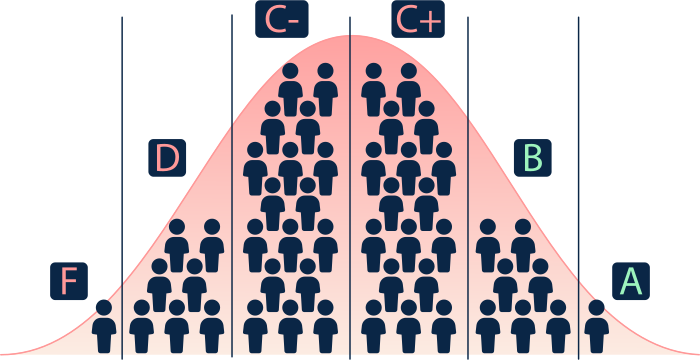
Traditional Achievement Distribution
Most students cluster in the middle with average grades. A few get As and Bs.
Failure is accepted in the system.
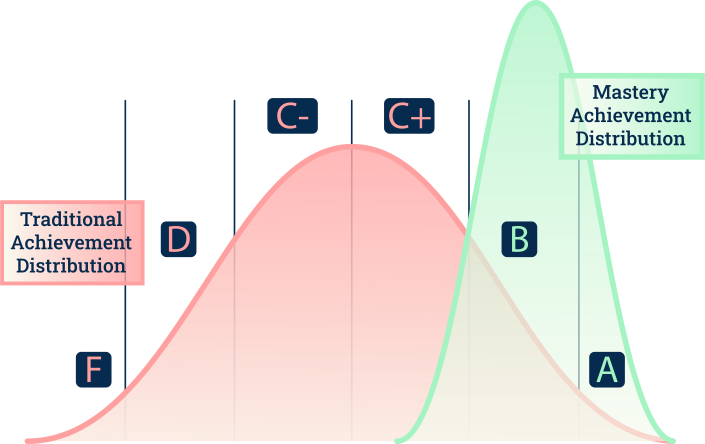
Mastery Achievement Distribution
Failure disappears. Every student gets the time and practice they need to succeed and the results are extraordinary.
Success is the norm, not the exception.
The outcome was that students in the mastery group performed a full standard deviation higher than the traditional group.
Failure disappeared, and everyone performed better.
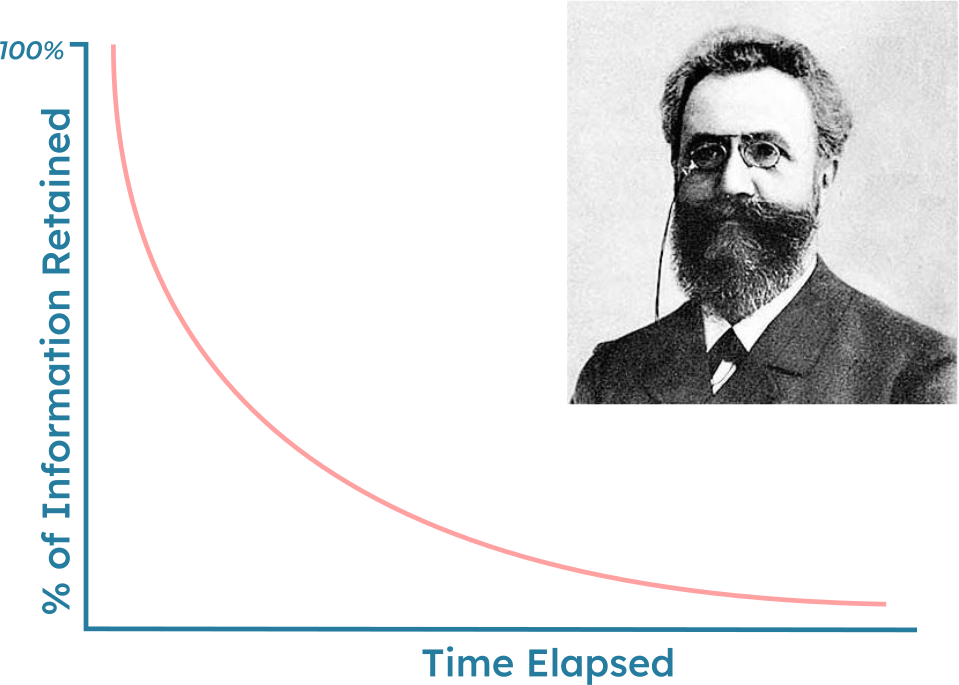
So at this point, you might be thinking: "Alright, this all sounds pretty cool. But what about that terrible, depressing chart you showed me — the one that shows we forget everything?"
Good news: our boy Ebbinghaus didn't want to be forgotten. So he gave us a second chart — and this one's way better.
It shows that when information is reviewed at increasing intervals, the forgetting gets slower.
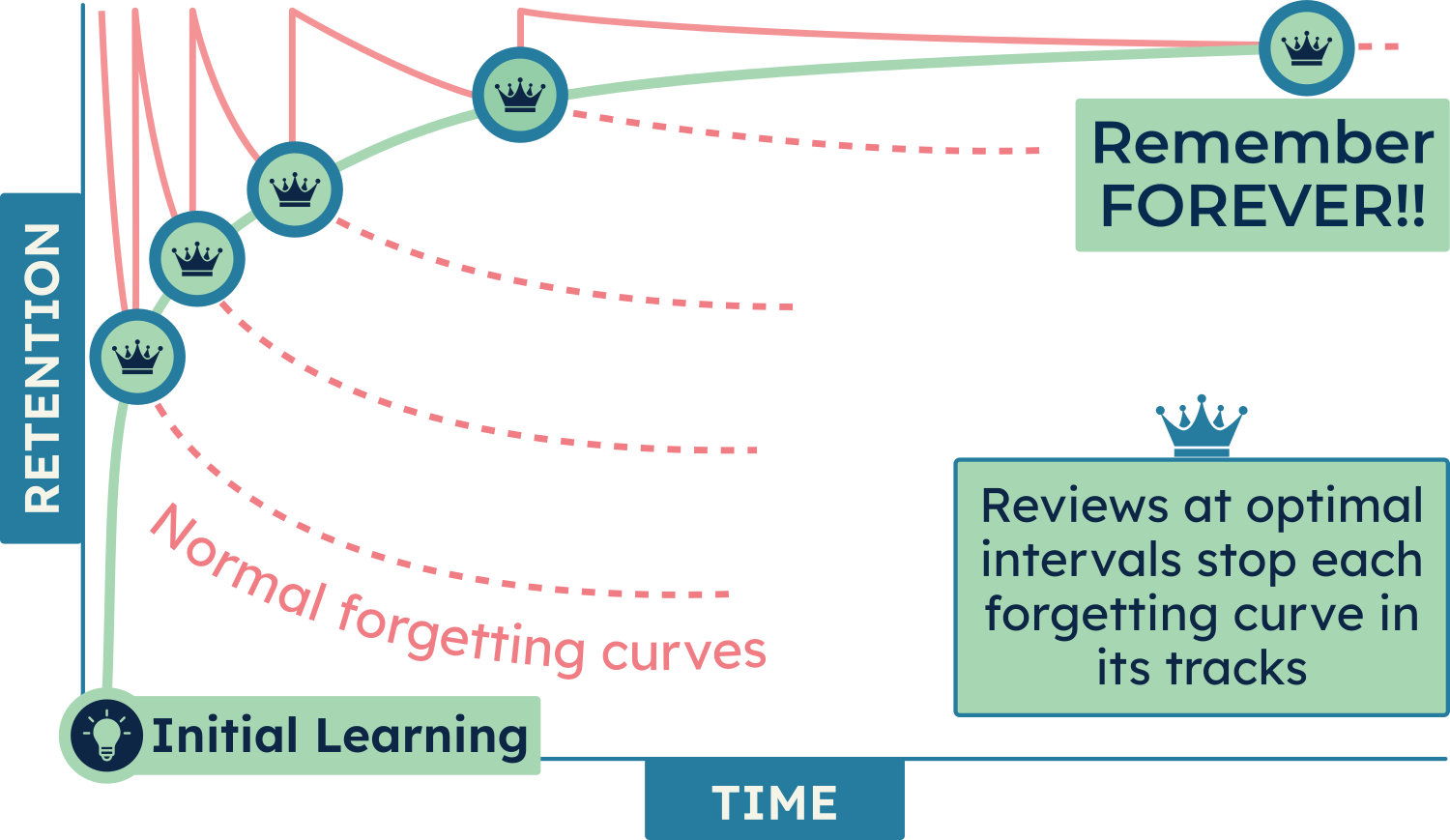
That means knowledge sticks. Long-term.
Over time, this principle has been refined into an algorithm called Spaced Repetition — a system that prompts review right before your brain is about to forget.
The best part about Spaced Repetition is that it works.
Spaced Repetition is one of the most powerful tools we have for long-term retention.
But let's be real.
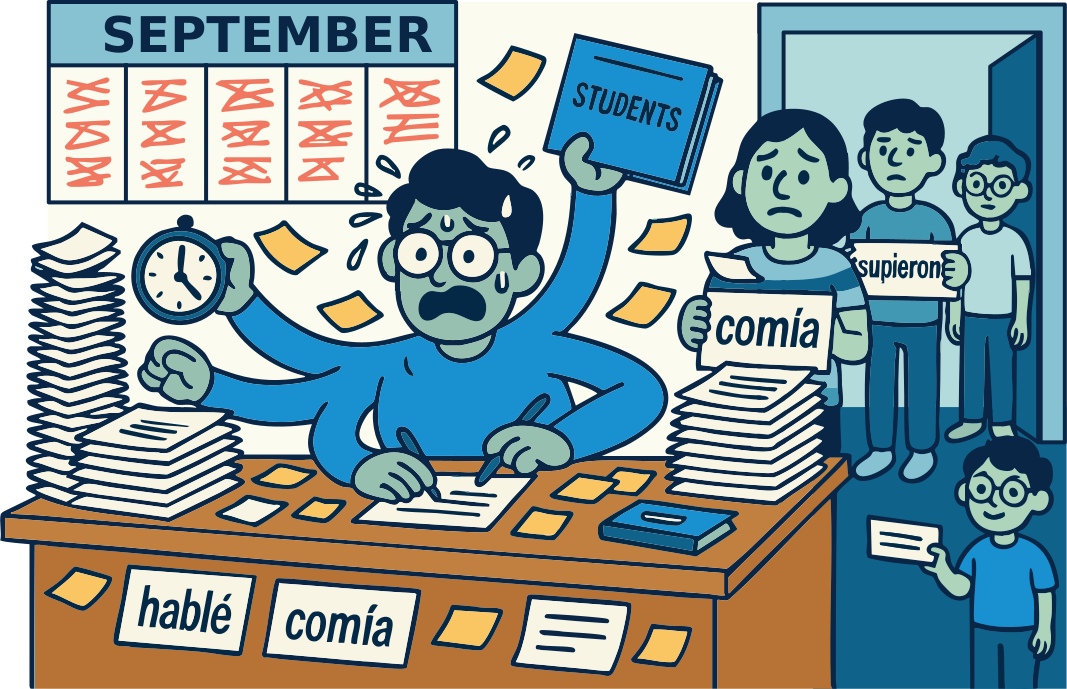
You can't run this by hand.
You can't sit with each student, track every verb form they know or don't, and time their reviews perfectly.
You're only one person. This is not what you signed up for.
And even if you did… students leave your class. Next year's teacher has no idea where you left off. The system resets, and all that work gets lost.
So what about flashcard apps?
Couldn't students just run their own spaced repetition system that way?
Well — yes. And flashcard apps are great.
In fact, apps like Anki, Brainscape, Quizlet, Memrise, and Supermemo are all built on this idea.
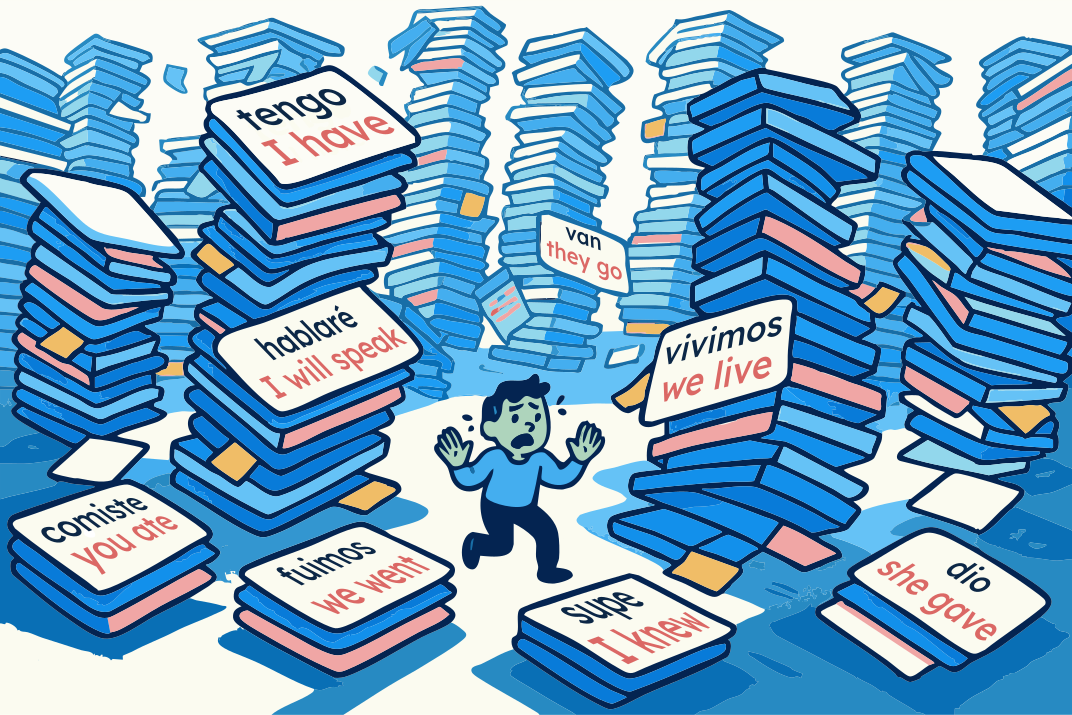
But here's the problem: verb conjugations are way too numerous and nuanced for generic flashcards.
In reality, you'd need:
Plus, flashcards don't give you, the teacher, any insight into what's going on with your students, so you have no way of knowing who needs help or that extra push.