
VerbMaster Mastery Learning Article
VerbMaster uses what is known as a spaced repetition algorithm to ensure the words you learn are retained in your long-term memory. Spaced repetition is based on the work of Hermann Ebbinghaus, a German psychologist who lived from 1850 to 1909. Ebbinghaus obsessively studied his own memory — memorizing thousands of nonsense syllables and meticulously recording how quickly he forgot them. He was the first person to scientifically quantify human forgetting, and his discoveries still underpin modern memory science today.
Ebbinghaus. Super dead, but not forgotten.
Why is that? Because Ebbinghaus discovered something fundamental about how human memory works: when we're exposed to new information, we forget most of it almost immediately. This rapid decay of memory is captured by what he called the forgetting curve — a sharply downward slope showing how quickly newly learned material fades without reinforcement.
The forgetting curve is steepest right after learning. Within the first hour, you can lose more than half of what you just studied. By the next day, most of the rest is gone. If you've ever crammed for an exam, felt confident going in, and then struggled to remember anything a week later — that's the forgetting curve at work.
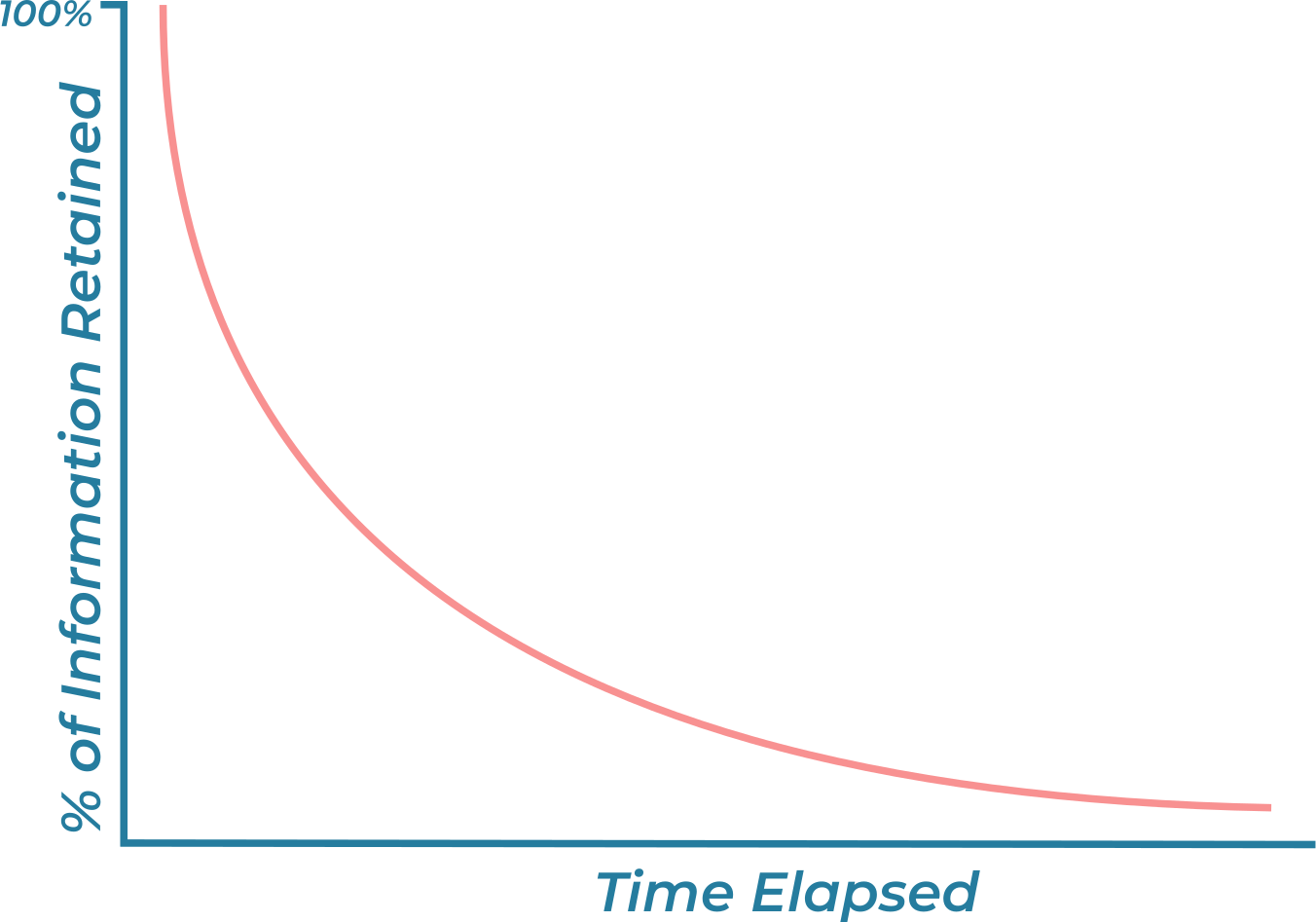
Without review, newly learned information fades rapidly — most of it disappears within the first 24 hours.
But here's what Ebbinghaus also discovered: reviewing information at the right intervals dramatically changes the shape of that curve. Each time you revisit something you've partially forgotten, your brain rebuilds the memory — and the next time, it sticks around longer. The forgetting curve starts to flatten. You lose less information over time. And as you continue to review, the curve moves upward — helping you remember more and more at each subsequent interval.
This is the core insight behind spaced repetition: it's not about how long you study, but when you study. Spacing practice sessions out over time, rather than cramming them together, produces dramatically better long-term retention. A subject studied for one hour spread across a week will be remembered far better than an hour crammed into a single session.
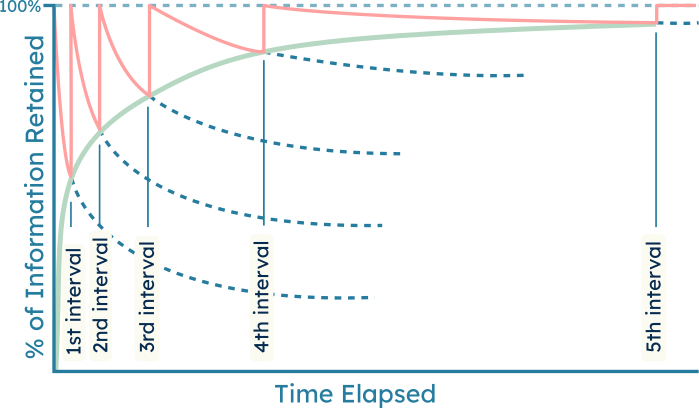
Each review session flattens the forgetting curve further — the more you revisit material at the right intervals, the more you retain over time.
The first review interval in VerbMaster is just 5 minutes after you're first exposed to a word. That may seem surprisingly short — but five minutes is plenty of time to lose a brand-new vocabulary item if you haven't seen it before. Think about how often you've been introduced to someone at an event and forgotten their name by the time you found your seat.
After that first review, the intervals become progressively longer. An hour. A day. A few days. A week. Each time you successfully recall a verb, VerbMaster spaces out the next review further, because your memory of that verb is now stronger and will take longer to fade. Verbs you find difficult get reviewed more frequently; verbs you've mastered reappear only occasionally to keep them fresh. The algorithm adapts to your personal retention curve for every individual word.
The result: VerbMaster keeps flattening your forgetting curve — for every verb, every form — until you've built a deep, lasting command of Spanish conjugation that doesn't just survive a test but sticks with you for years.
VerbMaster automatically schedules practice and review so verbs stay fresh until they become automatic. Start your journey to verb mastery today!
Your information is safe with us. We will never share your details.