17.1 Why Another Past Tense?
You’ve already learned the passé composé, which presents past actions as completed events. French also uses the imparfait, or imperfect, to describe what was ongoing, repeated, or already true in the background.
When telling a story, the passé composé often moves the action forward, while the imperfect describes the scene surrounding it.
The Imperfect
The imperfect describes ongoing, habitual, or background actions in the past.
Here's a quick example where the first verb is in the imperfect and the second is in the passé composé:
Je mangeais un croissant quand l'extraterrestre a atterri dans mon jardin.
I was eating a croissant when the alien landed in my yard.
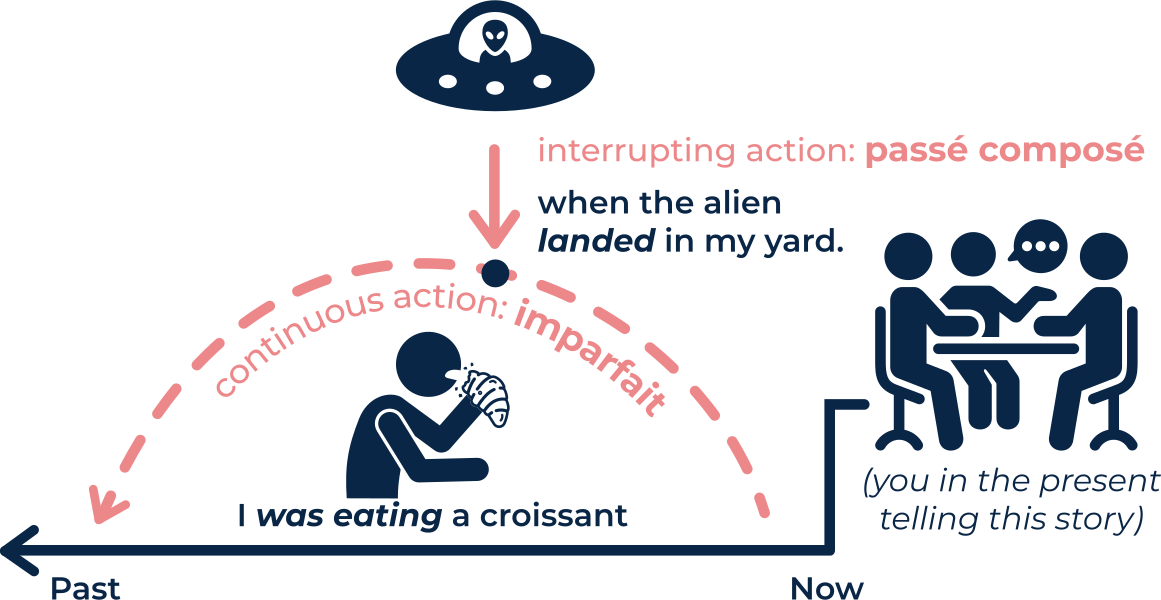
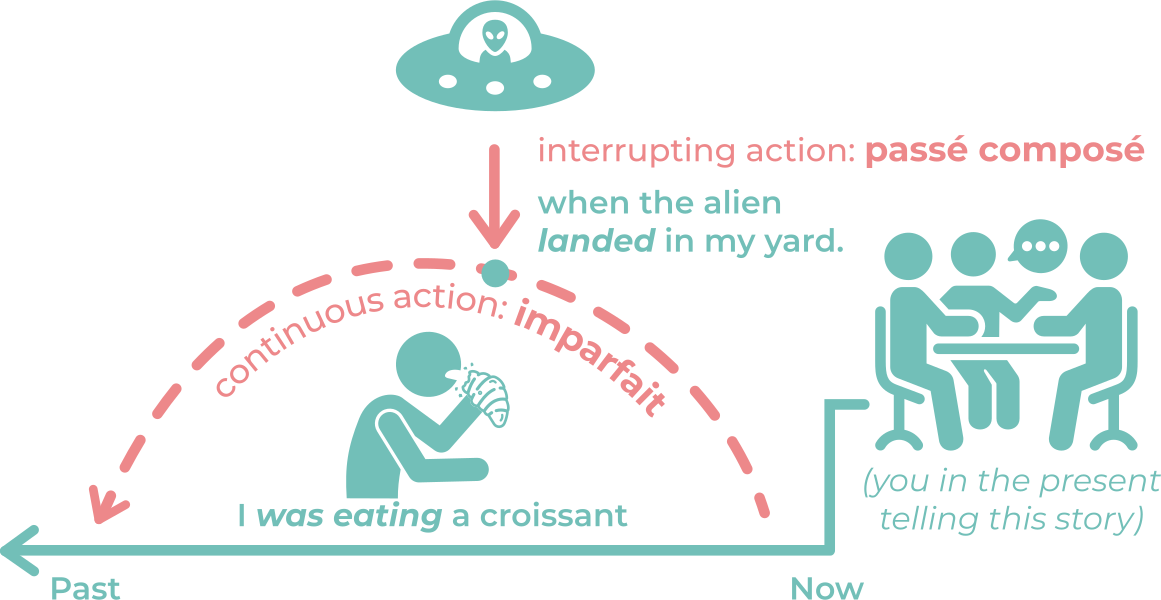
In this example, the passé composé highlights the specific action—the alien landing in my garden. It's the main event, moving the story forward. Meanwhile, the imperfect sets the scene with me eating my croissant, presenting this as an ongoing background action rather than a key plot point.
17.2 Formation of the Imperfect
Forming the imperfect tense is fairly straightforward. Fortunately, there's only one set of endings to learn for all verb types, regular and irregular:
Regular Imperfect Tense Endings
| Pronouns | All verb endings |
|---|---|
| je | -ais |
| tu | -ais |
| il, elle, on | -ait |
| nous | -ions |
| vous | -iez |
| ils, elles | -aient |
To conjugate a verb in the imperfect, follow the three steps below:
Here are our three model verbs fully conjugated in the imperfect:
17.3 Être in the Imperfect
The one exception to the steps above is the verb être, which does not take its nous conjugation for the imperfect. Instead, it uses the special stem ét-:
17.4 Using the Imperfect
Here are some helpful instances of when you should use the imperfect tense as opposed to another past tense. Use the imperfect when you're doing any of the following.
Describing or giving information in these categories
Weather
Il faisait très chaud.
It was very hot.
Age
Elle avait 25 ans.
She was 25 years old.
Characteristic
Mon grand-père était très grand.
My grandfather was very tall.
Health
Tu étais très malade.
You were very sick.
Feelings
Il était fatigué et il avait très soif.
He was tired and very thirsty.
Emotions
Ils étaient en colère.
They were angry.
Providing background information
Time
Il était dix heures du soir.
It was ten o'clock at night.
Date
Il était le vingt mars.
It was March 20th.
Describing an ongoing state
Le garçon était très content le jour de son anniversaire.
The boy was very happy on his birthday.
Narrating an ongoing action or multiple simultaneous ongoing events
Quand j'habitais au Canada, je travaillais dans un zoo.
When I lived in Canada, I worked in a zoo.
Narrating a repeated action without specifying an end or number of repetitions
Tu mangeais beaucoup de crêpes quand tu étais petite.
You ate lots of crepes when you were little.
Setting the scene (but then the passé composé interrupts!)
Il parlait pendant le film, mais elle lui a demandé d'arrêter.
He was talking during the film, but she asked him to stop.
Duration without a clearly indicated endpoint or timeline
J'attendais pendant des heures dans le cabinet avant de voir le médecin.
I was waiting for hours in the office before seeing the doctor.
To dive into the nuances of the imperfect as it compares to the passé composé, check out our Passé Composé vs. Imperfect lesson, up next!
Practice Time!
Master these verb conjugations from Lesson 17